


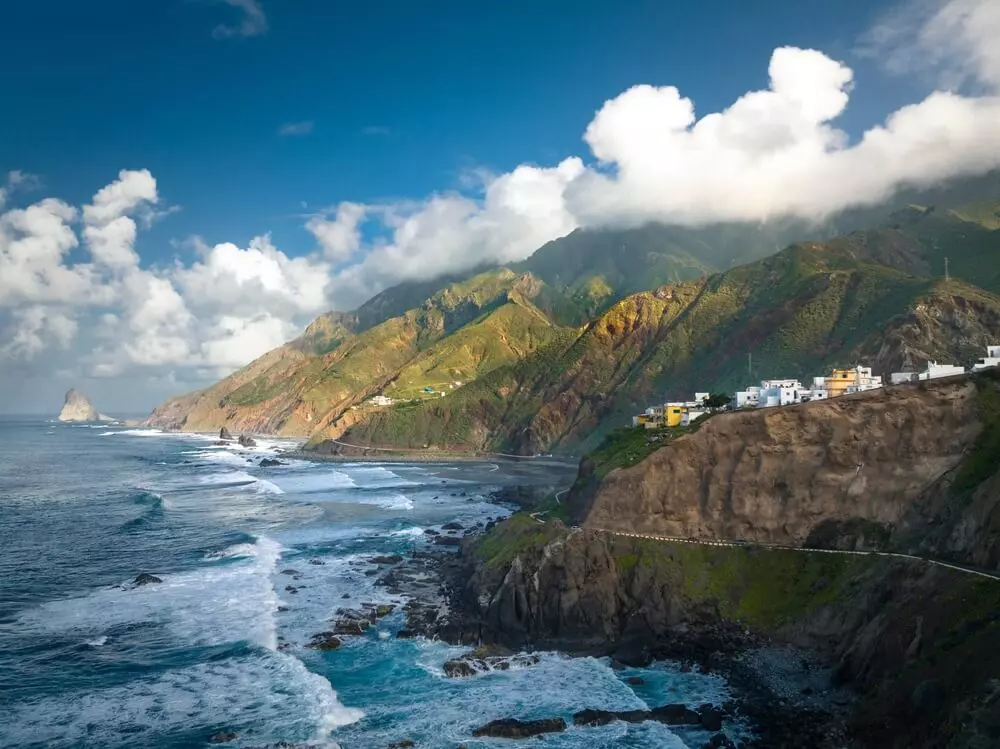
Tenerife offers far more than sun, beach and cheap drinks, if this is your plan for your Holidays on the island, we want to let you know that you are missing all what this spectacular island can give you.
On the same island you can move from an almost lunar volcanic landscape to a laurel ancient and savage forest, wander through historic towns with well preserved and still in use, colonial buildings, swim at black sand beaches, with volcanic cliffs at your back, or head up to the highest point in Spain and Europe, The Teide. That is why planning your route properly makes such a difference.
In this guide, you will find the essential places to see in Tenerife, how to divide the island into zones, which routes are most worthwhile depending on how many days you have, and which beaches yo must genuinely visit with realistic trip times.
Map of the Island
To help you locate each stop, have a look at this map of Tenerife before finalising your itinerary.
Editorial note: This guide is designed for first-time visitors who want to balance scenery, beaches, towns and practical travel times, rather than trying to see the whole island too quickly.
Where to Stay in Tenerife: Complete Guide
- How to Choose the Best Area to Stay in Tenerife
- Top Hotels in Tenerife for Every Type of Traveller
- Hotels in Tenerife South: Beaches, Activities and What to Do Nearby
- Staying in North Tenerife: Towns, Trails and What to Visit From Your Hotel
- Staying in West Tenerife: Los Gigantes, Garachico and Punta de Teno
- Hotels for Families in Tenerife: Best Stays and Plans with Children
- What to See in Tenerife in 4 Days
- What to See in Tenerife in 7 Days
- Best Time to Visit Tenerife and Find Good Hotel Prices
- Practical Tips
- FAQs About Hotel Accommodation in Tenerife
How to Choose the Best Area to Stay in Tenerife
Choosing the right place to stay makes a real difference to the trip. One of the keys to enjoying the island is thinking of it in zones, even if you are travelling with children. It helps to plan ahead because, although Tenerife may not look enormous on the map, mountain roads, viewpoints and changes in terrain mean some journeys take longer than you might expect.
If your priorities are beaches, more stable weather and water activities, the south tends to be more practical. If you prefer villages, northern routes and a greener Tenerife, staying around Puerto de la Cruz or nearby may suit you better.
- Teide and the island centre: the main landscape reference point. Come here for the national park, viewpoints and volcanic trails. Around 45 minutes by car from the south coast, or 50 minutes from La Laguna.
- North: greener, more traditional and home to historic towns such as La Orotava, Icod and La Laguna. About 30 minutes from Teide to La Orotava, and another 25 minutes on to La Laguna.
- Anaga and the northeast: ideal for hiking, viewpoints and wilder beaches such as Benijo. Around 30 minutes from La Laguna to the Cruz del Carmen viewpoint.
- South: more stable weather, comfortable beaches, resorts, water activities and boat trips. Costa Adeje to Los Cristianos is about 10 minutes along the coast.
- West: cliffs, scenic roads and places such as Los Gigantes and Punta de Teno. Los Gigantes is roughly 40 minutes from Costa Adeje, and Punta de Teno a further 30 minutes beyond that.
If you are staying for four or five days, the most practical approach is to avoid constantly changing your base. If you have a full week, plan a more complete route between north and south, or choose accommodation in an intermediate area depending on the type of trip you want.
Top Hotels in Tenerife for Every Type of Traveller
Here are some options to consider depending on the kind of trip you want:
Hotel for Families: Royal Tenerife Country Club ****
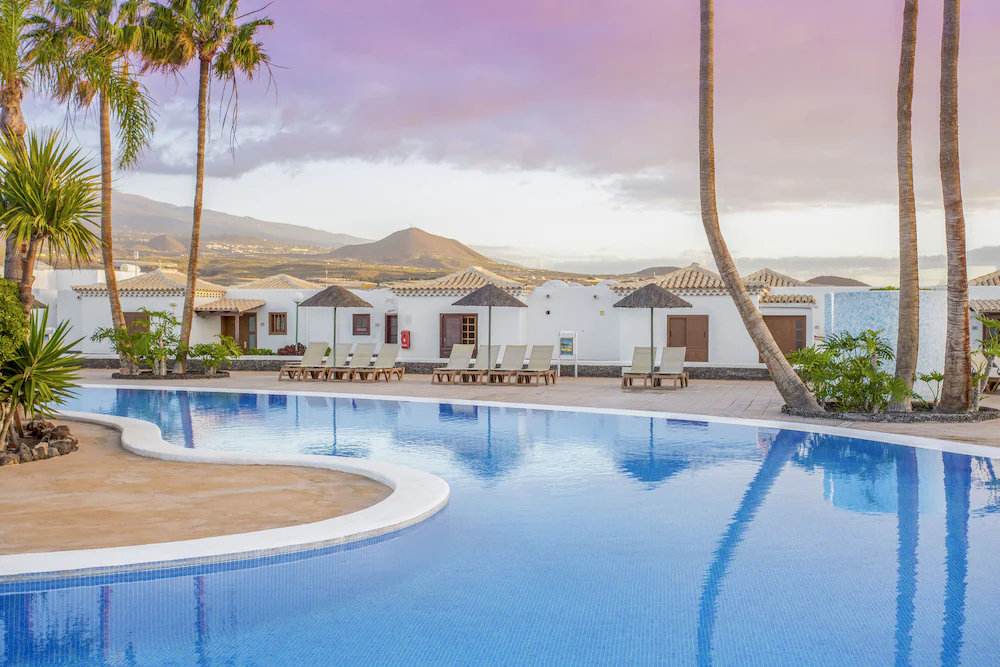
A very practical option if you want comfort from day one, especially thanks to its proximity to Tenerife South Airport. It works particularly well for families and longer or more relaxed stays, as the complex stands out for its spacious apartments, quiet atmosphere and facilities designed for combining rest and leisure, with an outdoor pool, spa and a very convenient location for moving between Golf del Sur, the coast and other areas of the south. It also suits travellers who want peace without giving up excursions, and even those planning to spend part of the trip playing golf or alternating between hotel and beach.
Adult Only Hotels in Tenerife: Gran Meliá - Palacio de Isora *****
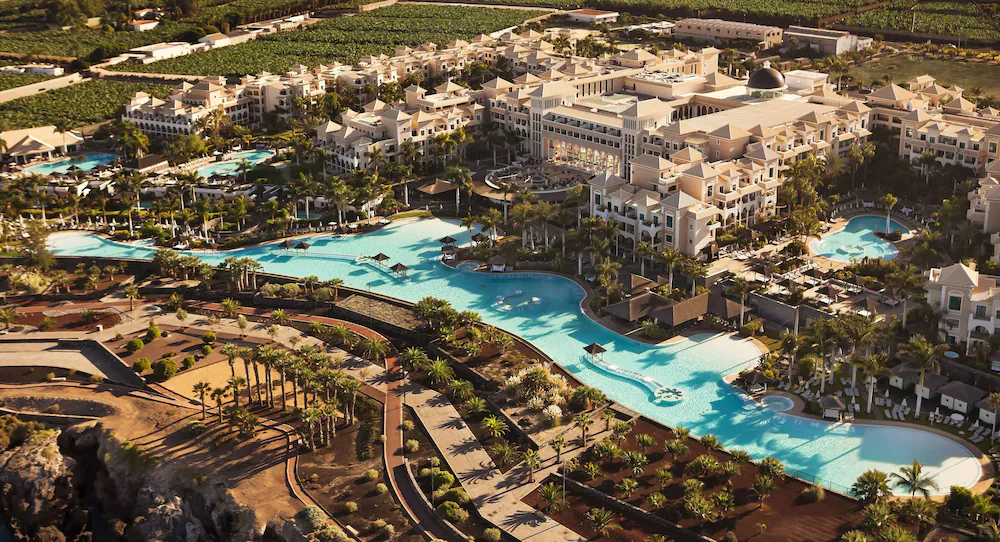
The focus here is not family-oriented but clearly aimed at couples, romantic getaways or adult travellers who want to prioritise the hotel, relaxation and high-end services. One of the five star hotels in Tenerife Canary Islands that genuinely delivers on the promise. The RedLevel experience is designed as a more exclusive tier within the resort, with private areas, pools, terraces and a much more laid-back atmosphere. It is an especially good choice if you want the hotel to be a central part of the trip rather than just somewhere to sleep. It also works very well for an anniversary getaway or for those who value privacy, good food and a more unhurried stay on the southwest coast.
Small Hotels in Tenerife: Hotel Monopol ***
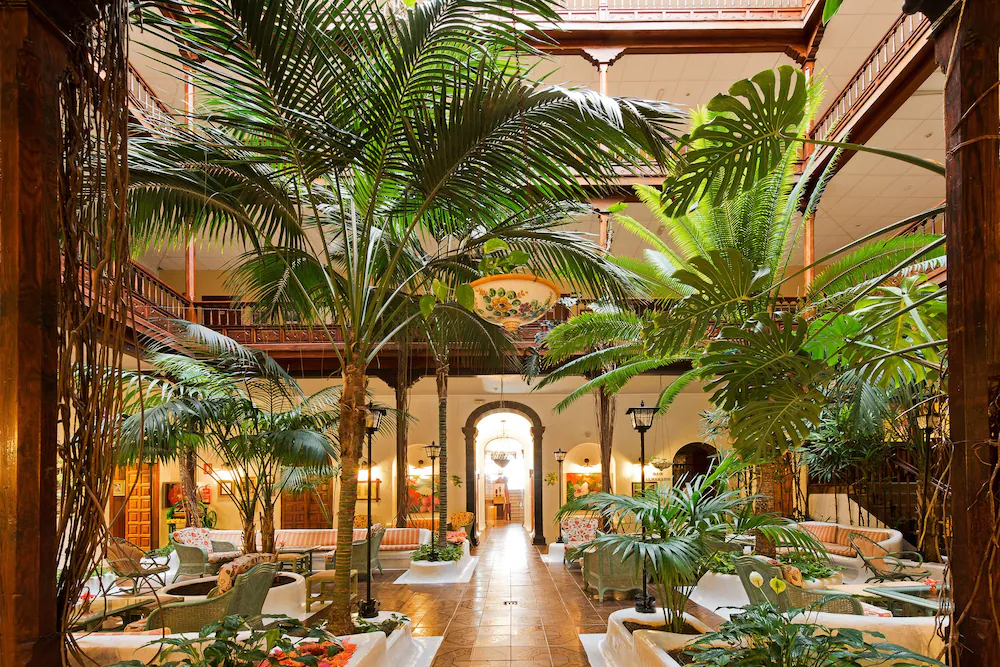
A very good base for anyone who wants to explore Puerto de la Cruz and the north of Tenerife without relying too much on a car once settled in. It works especially well for couples, quiet getaways and travellers drawn to hotels with their own identity, as its main appeal lies in the historic character of the building, the Canarian balconies, the inner courtyard and its location in a pedestrian area very close to the old town and the sea. I would not pick it for resort-style facilities, but rather for atmosphere, location and charm.
For Hiking and Nature: La Casona del Patio ****
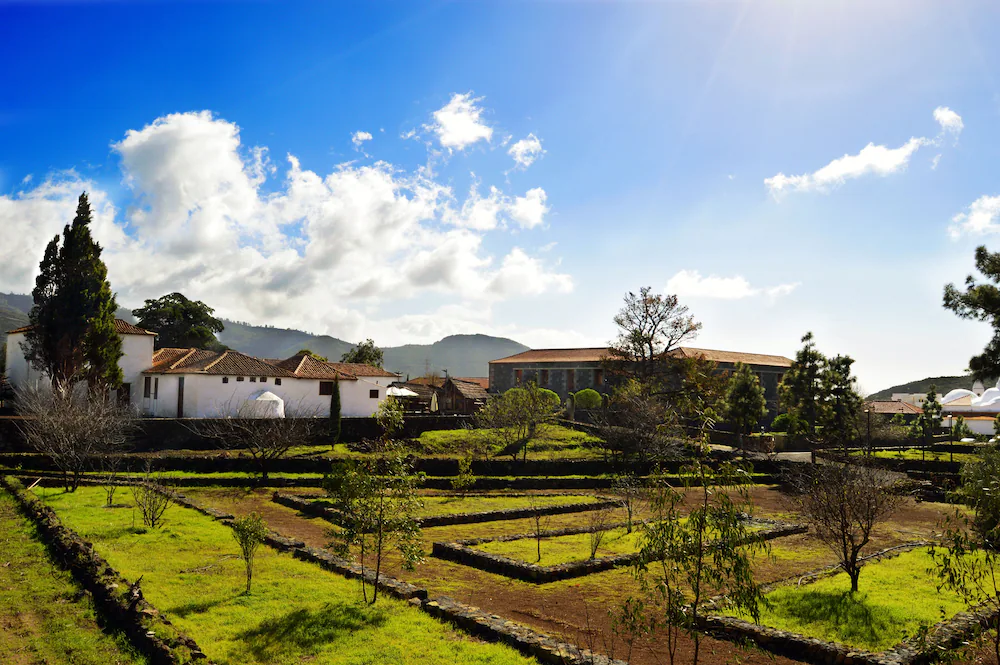
One of the most interesting options if you are looking for a rural, quiet stay with more of a nature focus than a beach one. It is especially well suited to adventurous travellers, hikers, couples who want to disconnect and visitors who prefer a less touristy, more authentic Tenerife. Its history as a 17th-century house and its location in the Santiago del Teide area give it a very different profile from coastal hotels. It also pairs well with plans such as northwest routes, the Chinyero area or getaways with a stronger landscape element. It can work for families who prioritise tranquillity and nature, but it fits best for couples, hiking and switching off.
For the Seafront: Hotel Vallemar ****
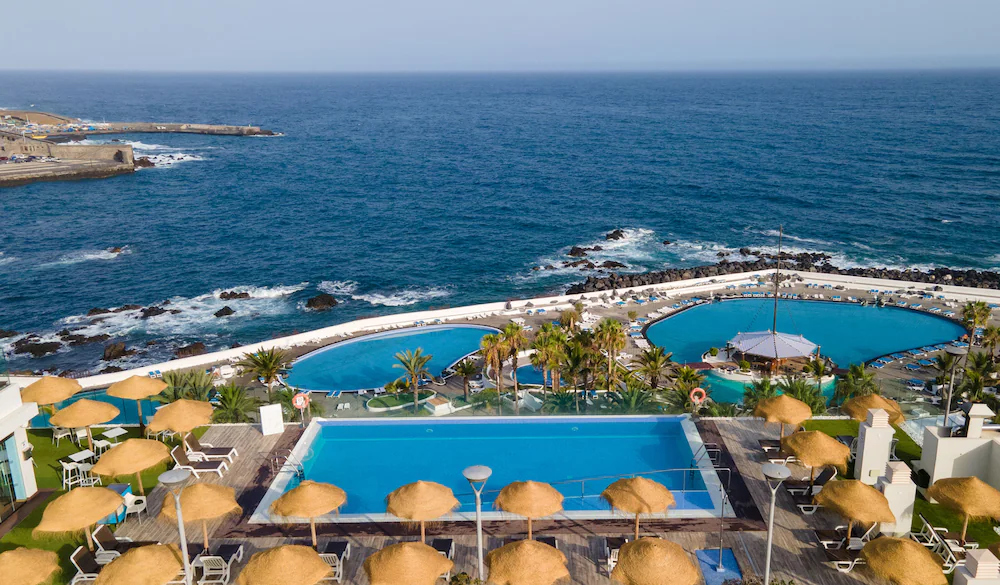
One of the most convenient bases if you fancy staying in Puerto de la Cruz with the seafront promenade, urban beaches and the Lago Martiánez complex right at hand. It works especially well for couples, travellers who want to get around on foot and those who value a very practical location for combining town, sea and excursions across the north. It does not have the rural feel of La Casona del Patio or the historic atmosphere of the Monopol, but it does offer a more direct seafront position and a more comfortable stay for anyone looking for a classic holiday hotel in the north. I would recommend it above all if you want a good base for exploring La Orotava, Icod or La Laguna and then returning to an area with more services and life.
Hotels in Tenerife South: Beaches, Activities and What to Do Nearby
Hotels in Costa Adeje, Tenerife: Beaches and Beyond
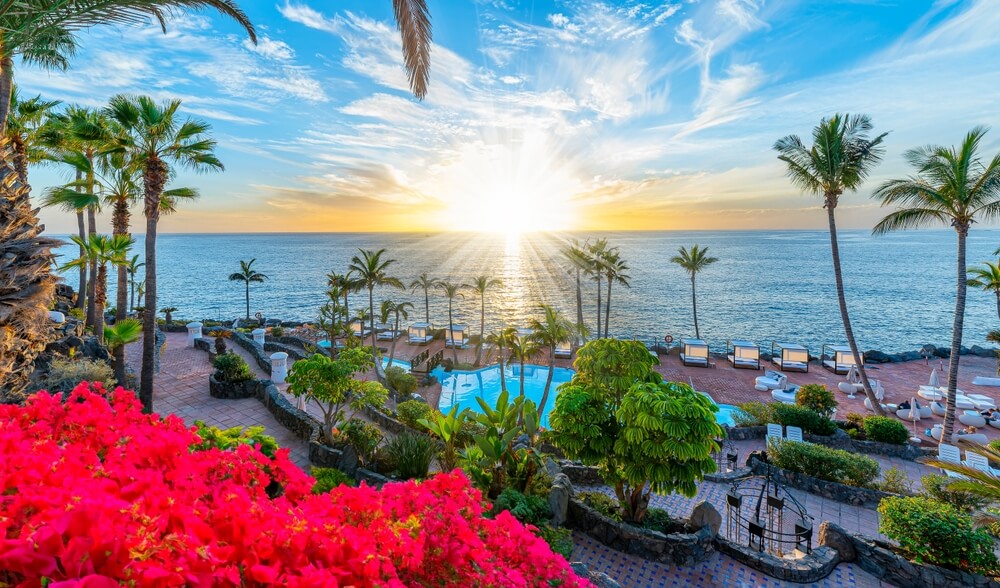
If what you want is comfort, services and a straightforward beach day, Costa Adeje tends to work better than many other parts of the island. Playa del Duque stands out for its well-kept surroundings, easy access and proximity to hotels, restaurants and the promenade. It is not the beach with the wildest character in Tenerife, but it is one of the most practical if you are travelling as a couple, with family or simply want an easy day by the sea.
Los Cristianos and Playa de las Américas
Los Cristianos and Playa de las Américas are good options if you want to combine beach time with atmosphere, dining and entertainment. I would not choose them purely for the beauty of the coastline, but they are practical if you want to move easily between promenade, beach, terraces and water activities.
This area is also a useful departure point for ferries and boat trips, so it can work well as a base if you are prioritising southern plans or connections with other islands.
El Médano
I'd say El Médano is one of the beaches that gives you the most if you're after somewhere that feels more like a real coastal town than a resort. It has a long sandy shoreline, lots of room to spread out, and that steady wind the area is known for, which is why you'll usually see people kitesurfing and windsurfing there. It's not the calmest or most sheltered beach on the island, but for me that's not really the point. I like it because it's great for a walk, easy to pair with food or a drink nearby, and simple to enjoy for a few laid-back hours without having to plan much around it.
Cetacean Watching
One of the most rewarding activities in Tenerife is a boat trip to see cetaceans. Excursions depart from the south throughout the year, with prices typically ranging from £15-50 per person depending on the operator, duration and whether food or drinks are included. This can be one of the most memorable additions to a first trip if you want to experience the island from the water as well as from the road.
Choose carefully. The Canary Islands regulate cetacean-watching activity, and Tenerife also promotes a local Sustainability Charter for Whale Watching. If you decide to go, look for operators that follow responsible standards and keep group sizes manageable. The Canary Islands tourism guidance on whale watching also helps explain why choosing a regulated operator matters.
On a short trip, this makes the most sense if you are already based in the south or planning to combine it with Los Gigantes, Costa Adeje or a more relaxed coastal day.
Diving
If you are interested in the sea beyond a boat trip, Tenerife has several dive centres and sites suitable for different levels. You do not need to be an expert to try it, but book ahead and choose a centre with strong reviews, good equipment standards and clear briefings. A single introductory dive typically costs around £50-70.
For most first-time visitors on a short itinerary, diving is best treated as an optional add-on rather than a priority. Teide, Anaga and the west coast usually give more value if your days are limited.
Staying in North Tenerife: Towns, Trails and What to Visit From Your Hotel
Teide National Park
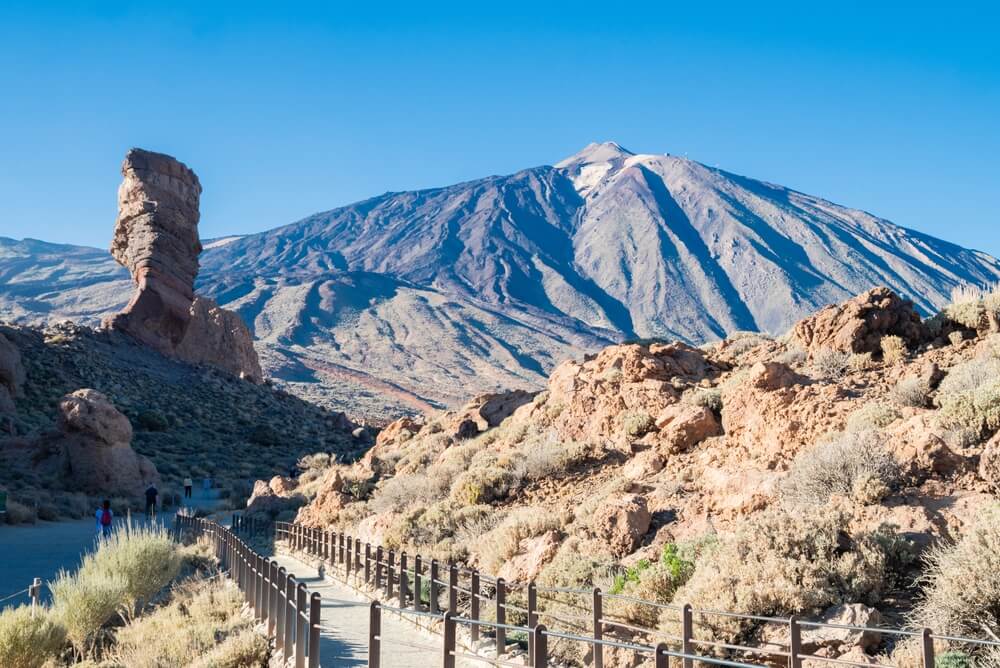
El Teide is Tenerife's most iconic landmark and, I'd argue, one of the most impressive natural sites in all of Europe. This part of the island is unlike anything else you'll find on Europe.
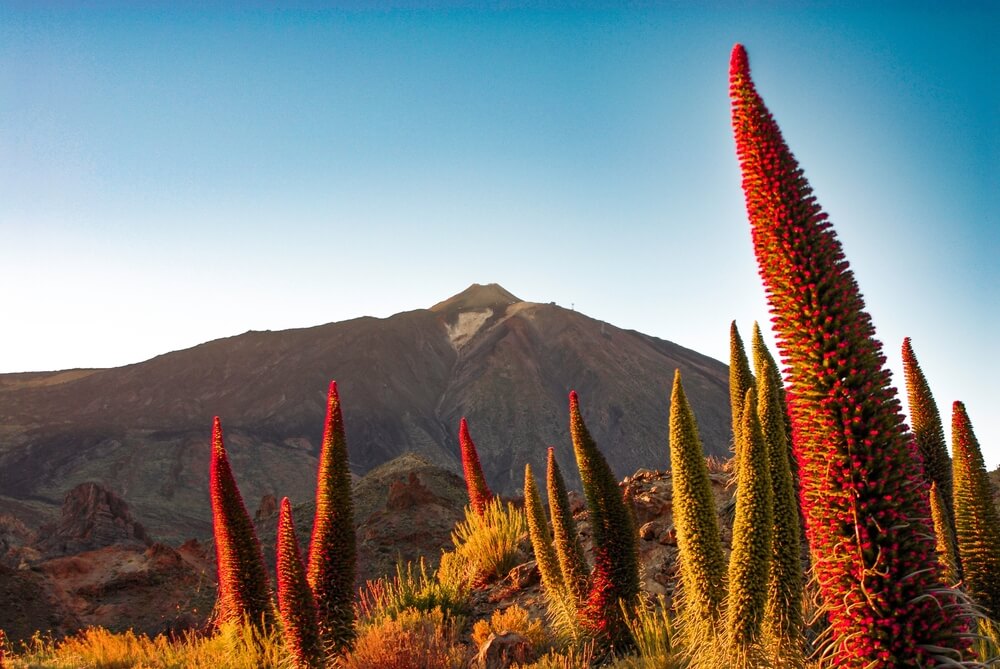
The landscape changes as you climb, from pine forests to lava flows, spiked volcanic rock formations and wide expanses of reddish and black volcanic terrain, with the cone of the volcano dominating the background. Even if you do not go all the way to the summit, the visit is worthwhile for the road itself, the viewpoints and the park trails.
Teide National Park is one of the UNESCO World Heritage Site. It works well whether you enjoy walking or prefer a simpler plan by car with several short stops.
If you are travelling as a family or do not want a demanding route, you can drive up to the cable car area and then explore the surroundings of the volcano. It's absolutely worth it. Why? Because you'll find yourself surrounded by a sea of lava, with different shapes and colours and endemic plants that you won't see anywhere else, like the Tajinaste, a tall spear-shaped flower endemic to the Canary Islands that blooms once in its lifetime and then dies.
If you want a fuller experience, check the official visitor information, as well as the cable car timetable and practical details, well in advance. The cable car costs around £39 return for adults and £19.50 for children. Access to the summit itself is free but requires a permit (limited to around 200 people per day), and you only have one hour to climb the last 200 metres. As a personal recommendation, try to go before eating and with people who are reasonably fit, as the altitude makes a real difference.
Inside the park, these three routes tend to be especially rewarding if you want to spend a day wandering around and discovering this otherworldly part of the island:
- Montaña Blanca to Pico del Teide (Route 7): the most demanding option, best for hikers who specifically want to ascend on foot and experience the high volcanic mountain up close.
- Roques de García (Route 3): one of the best choices if you want a complete Teide experience without too much effort. It includes some of the park's most recognisable formations.
- Siete Cañadas (Route 4): a good option for travellers looking for a longer walk with both scenic and geological interest.
Useful information: even on cloudy days, the sun here is much stronger than it seems and the altitude is noticeable. Bring water, sun protection and an extra layer, especially if you head up early or stay for sunset. Keep in mind that you are at almost 2,000 metres above sea level, rising to 3,715 meters at the Teide's peak, so oxygen levels drop significantly and UV radiation is at its highest. Come well prepared and with strong UV protection.
If you can fit the visit in late in the day, the changing light over the volcanic landscape is especially memorable. And if stargazing interests you, this is one of the island's most remarkable areas for night skies.
Anaga Rural Park
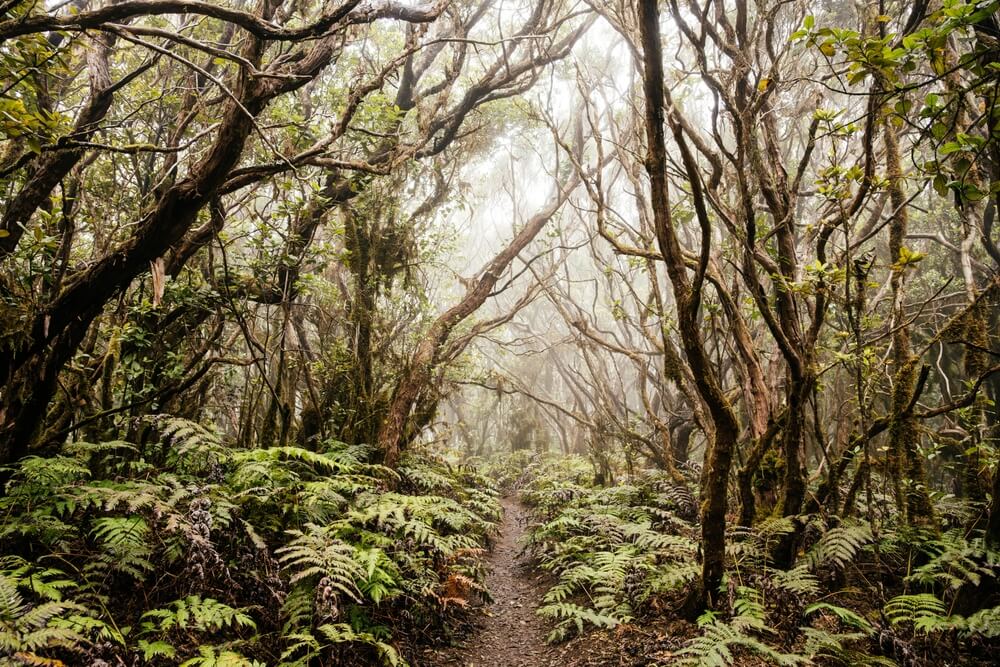
Anaga is one of the places that most surprises travellers who arrive in Tenerife expecting only warm weather and beaches. Here the landscape changes completely: narrow roads, low mist, dense vegetation, ravines and paths winding through laurel forest. It is one of the best areas on the island for hiking in Tenerife.
The park was declared a UNESCO Biosphere Reserve in 2015. It's well worth visiting even if you are not planning a long hike, because many of its viewpoints already offer a completely different perspective of the island.
Among the more accessible walks, the Sendero de los Sentidos works especially well if you are short on time or visiting with family, while the Bosque de los Enigmas is a circular route of around 5 kilometres through rewarding terrain for those who want to walk without overcomplicating the day.
The Mirador de la Cruz del Carmen is one of the best starting points. From there, you can decide whether to do a short trail or simply continue exploring by car. If you have time, combining Anaga with a coastal stop afterwards is one of the best ways to round off the day.
In this area you will also find beaches such as Benijo and Almáciga, far less packed and artificial than those in the south. They are a better choice for enjoying pure nature and dramatic landscapes, which is exactly why many travellers remember them so vividly.
San Cristóbal de La Laguna
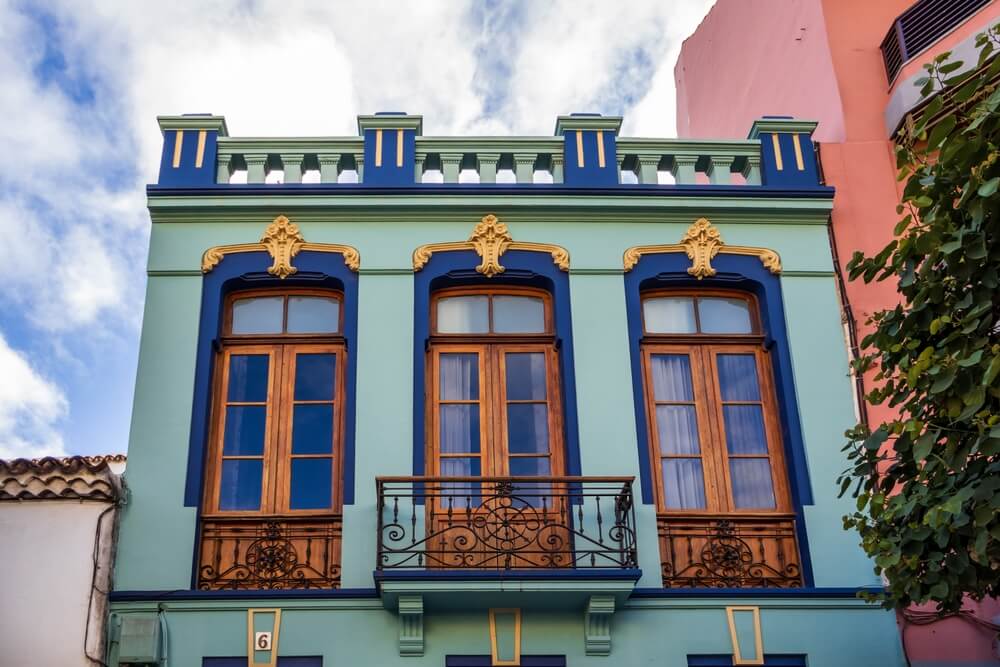

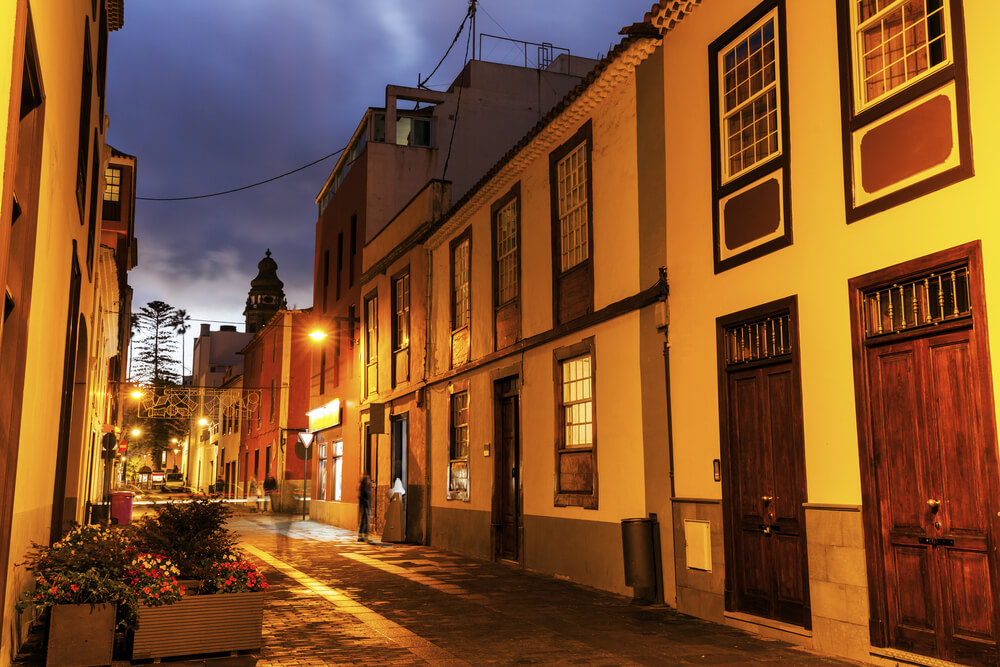
La Laguna is the clearest cultural stop on a first trip to Tenerife. Its appeal lies in the urban layout, the civil and religious architecture and the sense that this is a real, lived-in city rather than somewhere shaped purely for tourism. It was declared a UNESCO World Heritage Site in 1999, and its historic centre is exceptionally well preserved.
The best way to enjoy it is on foot and without rushing, paying attention to façades, courtyards, churches and balconies. A walking tour can be useful if you want more historical context, but it is also very easy to enjoy independently. It fits perfectly into half a day and pairs especially well with Anaga or a wider route through the north.
It is also a good place to stop for a relaxed lunch and try local cuisine away from the more resort-focused coastal atmosphere.
La Orotava and the Valley
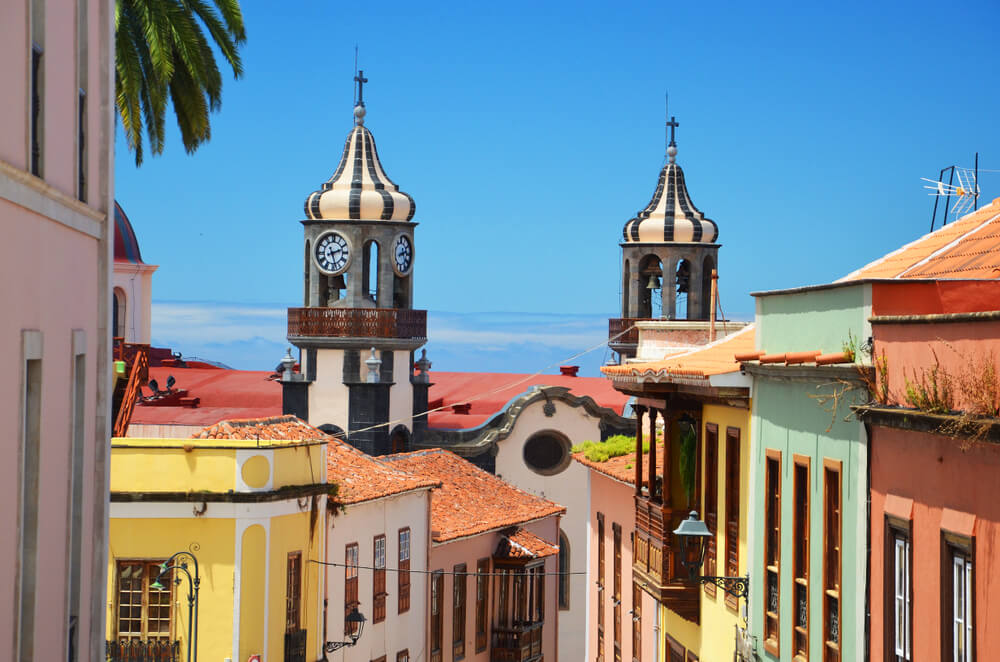
La Orotava stands out for its historic centre, one of the most beautiful and best-preserved in Tenerife. Its cobbled streets, colonial houses and wooden balconies justify the stop, but not only for aesthetic reasons. It also helps explain the island's history and the importance this area once held within the north of Tenerife.
A very common stop here is La Casa de los Balcones, which gives you a closer look at traditional Canarian architecture and part of the interior of a historic rich family house of the island. It is not a long visit, but it works well within a walking route around the centre and is a great way to see how Carians lived in the 19th century.
Afterwards, head to one of the viewpoints over the Orotava Valley. From there you can see why this area has such strong landscape appeal: the valley opens towards the sea and, on a clear day, the combination of terrain, vegetation and townscape is especially distinctive.
Icod de los Vinos and the Drago Milenario
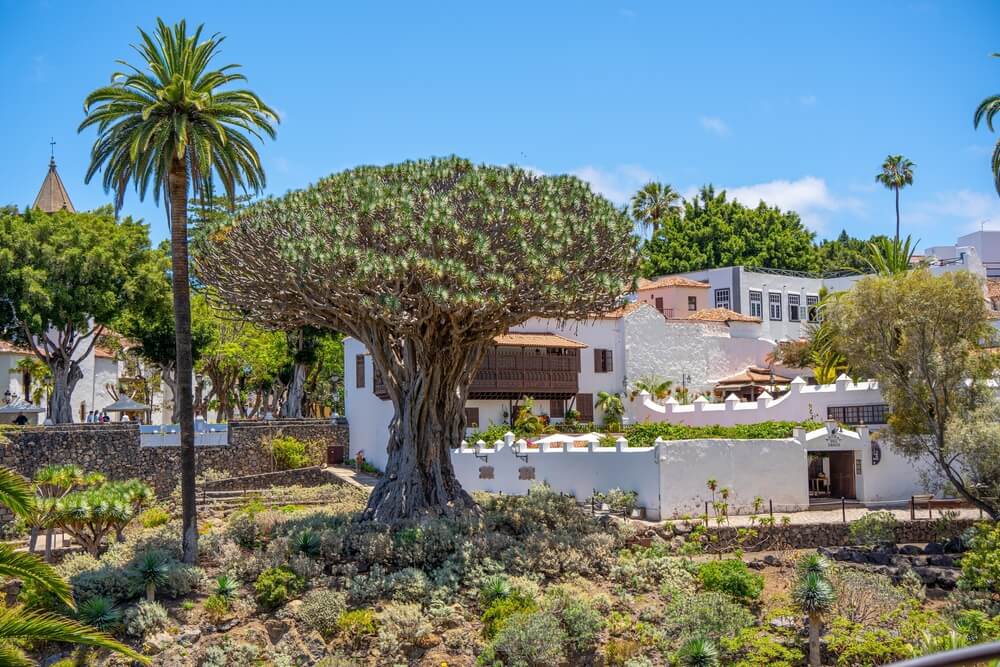
Icod de los Vinos usually makes it onto a northern route for one very specific reason: the Drago Milenario. It is not just a famous tree. It is one of the great natural symbols of Tenerife. Entry to the Parque del Drago costs around £5 for adults and is free for children under 6. The stop works well because it is brief, easy to fit into a route and combines neatly with nearby places such as Garachico or the Cueva del Viento.
Beyond the dragon tree, the town is also a good place to try fish with papas arrugás and green mojo, or grilled cheese with mojo. If you have time, Icod works well as an intermediate stop within a longer day exploring the north and northwest.
Cueva del Viento
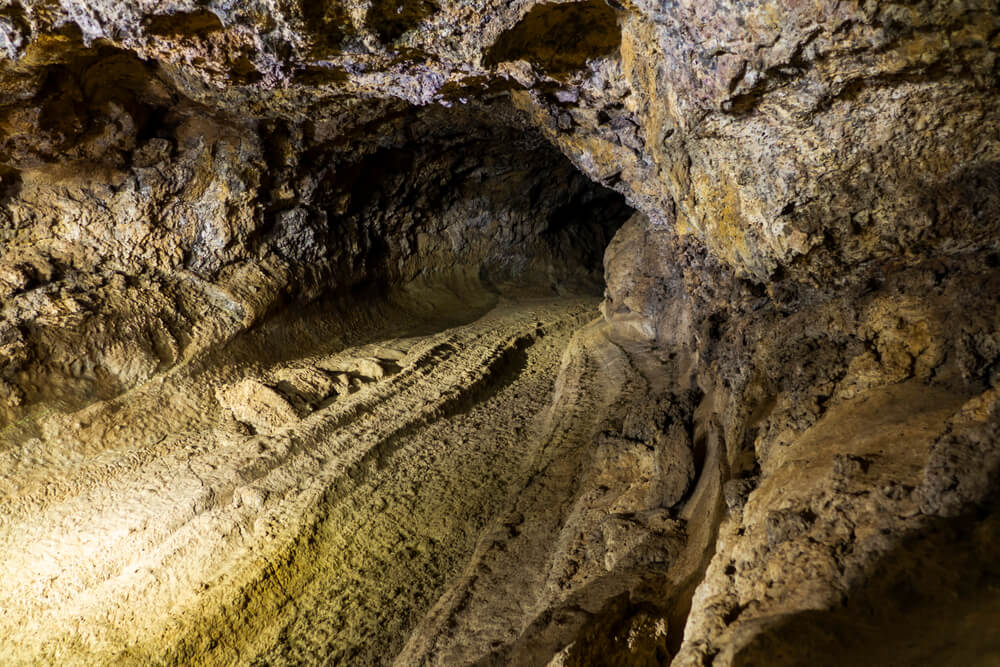
Cueva del Viento is one of the most distinctive visits you can make in Tenerife. Here the interest is not in panoramic views but in understanding how a volcanic lava tube forms from the inside. It is located in Icod de los Vinos and forms part of one of the longest volcanic tube systems in the world.
The visit can only be done with a guide, and in this case that makes perfect sense. This is not a place to enter independently but a protected geological site where the context adds almost as much as the experience of walking through the lava tube itself. Tickets cost around £20 for adults and £8.50 for children, and the guided tour lasts about two hours in total. The official Cueva del Viento website and the page explaining how the visit works have all the details you need to plan the day.
Advance booking is essential, particularly in high season or on popular travel dates.
Keep in mind that this is not the right fit for every traveller. The route requires a certain level of mobility and you need to follow the guide's instructions throughout. The inside of the tube is pitch black and you can easily stumble and fall if you are not cautious. For anyone who has already seen towns, beaches and viewpoints, though, it is one of the activities that adds the most variety to a Tenerife itinerary.
Benijo
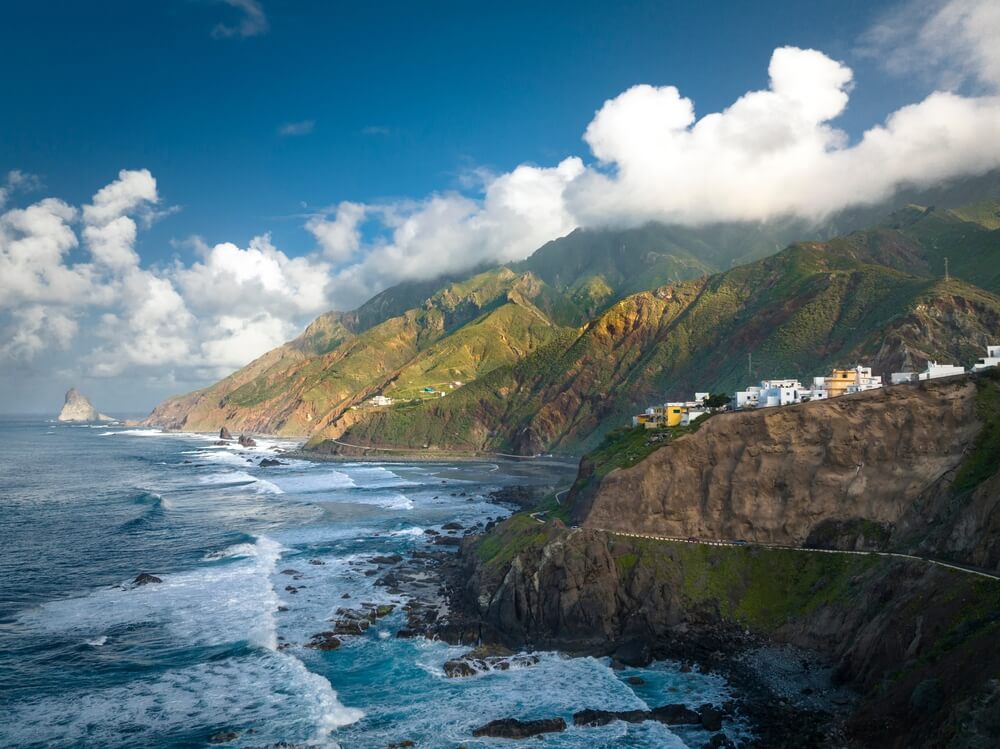
Benijo is not a beach for everyone, and that is exactly why it stands out. You come here for the landscape: black sand, sea stacks rising out of the water, cliffs behind and a wide, exposed stretch of coast. It is one of the most visually rewarding stops on the island, especially if you are drawn to Tenerife's wilder side.
That said, it is not always the best beach for swimming. Currents and waves can be strong, so in many cases it is better for admiring, walking and photography than for spending hours in the water.
Las Teresitas
Las Teresitas works especially well for families and for anyone looking for a comfortable beach near Santa Cruz. Its main advantage is that the water is usually calmer than in more exposed areas thanks to the breakwater, which makes it a reliable option for a relaxed morning or afternoon without complications.
It is not the most natural beach on the island, but it is one of the most practical if you value easy access, space and calmer bathing. If you go, head to the viewpoint afterwards to see it from above with Anaga in the background.
Staying in West Tenerife: Los Gigantes, Garachico and Punta de Teno
Los Gigantes Cliffs
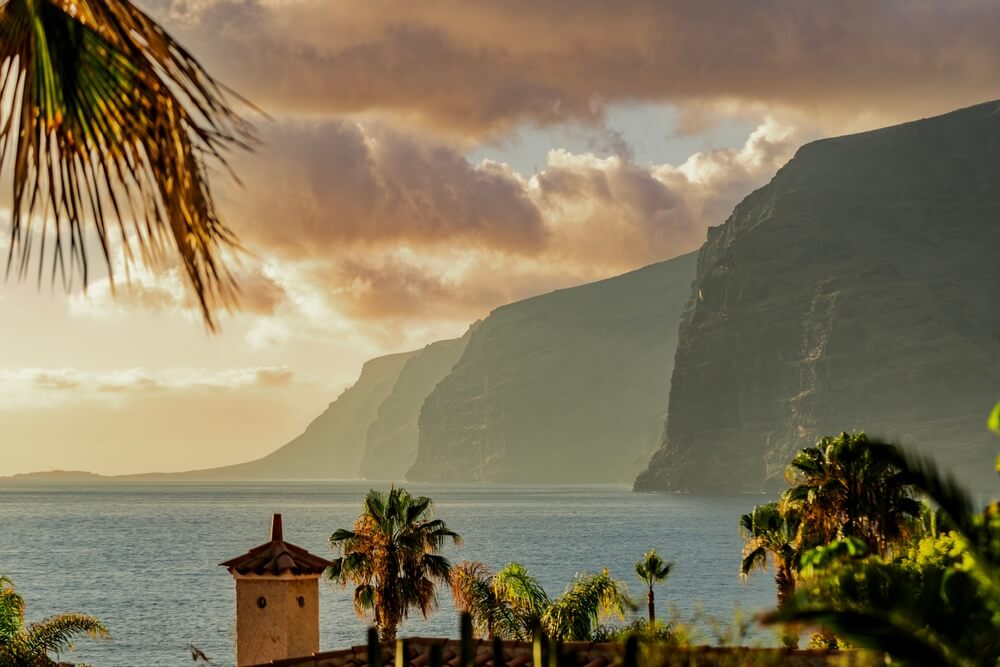
The Cliffs of Los Gigantes are one of Tenerife's most recognisable coastal landscapes. The volcanic wall drops almost vertically into the sea and, seen from below or from a distance, gives a sense of scale that is hard to tell with words or to find elsewhere on the island.
How to See Los Gigantes
There are two good ways to enjoy this area. The first is from land, stopping at viewpoints or heading to the beach. The second, and for many travellers the more rewarding option, is from the sea. From there you appreciate the height of the cliffs and the relief of the coastline much better. These are the best ways to see Los Gigantes:
- Mirador de Archipenque: a good stop if you want a quick panoramic view without much detour.
- Playa de Los Guíos: a small black sand beach at the foot of the cliffs. It is more interesting for the setting than as a place to spend an entire beach day.
- Boat trip: the best way to understand the true scale of the area. Excursions typically cost from £15-40 per person depending on the operator and duration, and can be combined with cetacean watching.
If you are short on time, Los Gigantes pays off most when paired with a boat excursion or a west-coast route. As a standalone stop it still works, but it becomes much more rewarding as part of a full day out.
Garachico
Garachico makes most sense if you are already exploring Icod, Garachico and Punta de Teno in one day. On its own, it is charming but usually not a first-priority stop on a short trip.
The best-known feature is its natural pools, especially El Caletón, but the value of the place also lies in the overall atmosphere: quiet streets, traditional architecture and a much calmer pace than the more tourist-focused south.
At these natural pools, be cautious and follow local advice. If the sea is not calm, the currents can whirlpool you, and you are going to have a bad time.
If you are already doing the Icod route, Garachico fits perfectly as the next stop. It is a place for strolling, sitting down for a while and seeing another side of Tenerife that feels more local and less hurried.
Punta de Teno
Punta de Teno deserves a visit for the road, the lighthouse and the feeling of reaching the far edge of the island. It is a quieter, more landscape-focused area. I would not make it the only major plan of the day if your itinerary is tight, but it is a strong addition to a route through the northwest or after Garachico.
Check the official TenerifeON access information and alerts beforehand, as private car access and route conditions can vary.
Hotels for Families in Tenerife: Best Stays and Plans with Children
Tenerife works well for families, but not everything is equally suitable when you are travelling with children. Some beaches have strong currents, certain routes are too demanding and some visits will not hold a child's attention for long. What the island does offer is enough variety to build full days that work for everyone.
Best hotels for families with children in Tenerife
If you want the trip to be genuinely comfortable, choosing the right area and accommodation matters a great deal. In the south, Costa Adeje and surroundings tend to work especially well for families because they concentrate calmer beaches, easy promenades, nearby restaurants and hotels designed for longer stays. In this area:
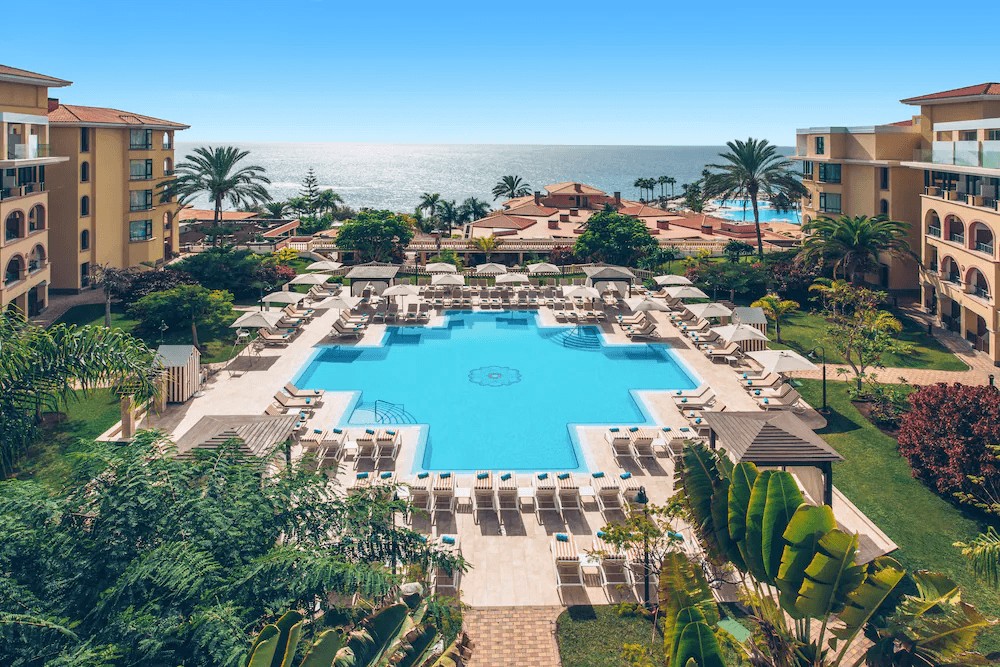
Iberostar Selection Anthelia *****
is a very practical option if you want comfort and easy access to family-friendly plans. Just a short walk from Playa El Duque, Iberostar Selection Anthelia sits in a fantastic part of Adeje (Costa Adeje), only ten minutes on foot from Playa El Duque and Playa de Fañabé. The beach complex is also 6.1 km from Siam Park and 2.7 km from other Tenerife beaches. Perfect for plans with children. The resort also has 4 different restaurants with themed evenings, so you never get bored with the food.
And if you prefer an even more premium family stay in Tenerife:
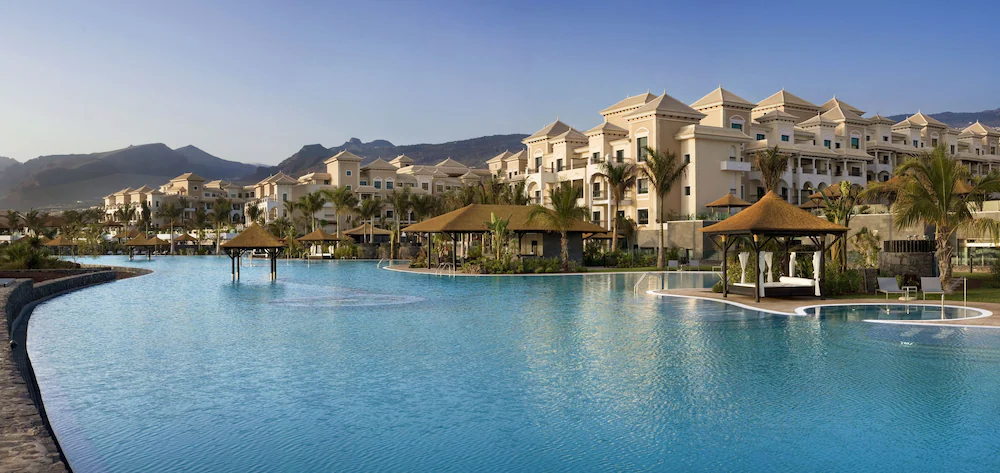
Gran Meliá Palacio de Isora *****
also fits very well within a family trip to Tenerife. As we have already mentioned, this hotel has one of the longest saltwater pools on the entire island and almost in all of Spain. It also has several themed restaurants, poolside bars, entertainers, private spa areas and ice cream and drinks stands. Without a doubt the best option for everyone to enjoy themselves while parents can relax without worrying too much about the children.
Safest and most comfortable beaches for families
Las Teresitas is one of the best options if you are travelling with small children: the breakwater helps keep the water calmer, there is plenty of space and access is easy. In the south, Costa Adeje and Playa del Duque offer services, shade and a promenade right beside the sand, which makes a long beach day much easier to manage. Beaches such as Benijo or Almáciga, by contrast, are better for families with older children and only for looking and walking, not for swimming.
Accessible routes with children
In Anaga, the Sendero de los Sentidos is short, flat and very rewarding with children: the laurel forest holds their attention and the walk does not drag on. At Teide, the Roques de García area allows you to do a short stretch without committing to the full trail, and the volcanic scenery tends to impress at any age. The natural pools at El Caletón in Garachico can also work well as a family stop that combines a walk with some time by the water.
Visits that work well with children
The Drago Milenario is a brief stop that does not tire anyone out: see the tree, take a short turn around the park and move on. San Cristóbal de La Laguna works as a relaxed urban walk with an ice cream or snack stop built in. The Cueva del Viento can be a great experience for children from a certain age, though it is important to consider whether they have the mobility and patience the guided route requires.
Theme parks and adventure
Siam Park (from around £37 for adults, £25 for children) is the most obvious choice for a different kind of day. It makes sense if you want a full day focused on fun rather than scenic stops. Forestal Park (from around £18 for children, £24 for adults) can also be a good fit if you want something more active and outdoors, with treetop circuits and zip lines adapted to different ages.
What to See in Tenerife in 4 Days
With four days, you need to accept one thing: you will not see everything. The best approach is to aim for variety and avoid unrealistic itineraries. This is a fairly balanced plan for a first visit.
- Day 1: Teide and volcanic landscape. Dedicate the day to Teide National Park. Make several road stops, walk the Roques de García route and only book the cable car if you genuinely want to prioritise that experience.
- Day 2: Historic north. Visit San Cristóbal de La Laguna and continue to La Orotava. If you are ahead of schedule, add Puerto de la Cruz or a valley viewpoint.
- Day 3: Anaga and northeast coast. Combine an easy trail or several viewpoints in Anaga with a stop at Las Teresitas or, if you prefer wilder scenery, Benijo.
- Day 4: West or south depending on priorities. If scenery matters most, head to Los Gigantes and, if possible, add a boat trip. If you would rather slow the pace, spend the day at the southern beaches.
This itinerary works because it does not try to cover too much and blends Tenerife's main contrasts well: volcano, forest, heritage and sea.
What to See in Tenerife in 7 Days
With a full week, you can plan a more complete route and make room for areas that often get left out on a shorter trip.
- Days 1 to 4: follow the itinerary above.
- Day 5: Icod, Cueva del Viento and Garachico. An excellent day if you want to combine geology, a historic town and the coast.
- Day 6: West and Punta de Teno or a day at sea. You can complete the Los Gigantes area or book a cetacean-watching excursion.
- Day 7: Beach or family day. El Médano, Costa Adeje, Siam Park (from around £37 for adults, £25 for children) or a quieter day all work well here depending on the pace you have been keeping.
With seven days, think of the island as a journey through contrasts rather than a collection of separate points on a map. That is when Tenerife makes the most sense as a destination.
Best Time to Visit Tenerife and Find Good Hotel Prices
Tenerife can be visited all year round, but not every season suits every kind of trip. If you are looking for a balance of good weather, reasonable prices and fewer crowds, spring and autumn tend to be the best options. During those months, the weather is usually still warm enough to combine beach time with excursions, and there is generally less pressure than in summer or major holiday periods.
As always in Tenerife, conditions vary by zone. The south is usually sunnier and drier, while the north and higher areas can feel cooler or more changeable on the same day.
| Season | Average temperature | Hotel prices | Flight prices | Tourist volume | Greenery / vegetation | Pros | Cons |
|---|---|---|---|---|---|---|---|
| Spring | 19 to 23 °C | Mid-range | Mid-range | Medium | High | Great for hiking, mild temperatures and greener landscapes. | Easter can bring higher demand. |
| Summer | 24 to 28 °C | High | High | High | Medium | Longer daylight hours and very stable beach weather. | More crowds and higher prices. |
| Autumn | 22 to 26 °C | Mid-range | Mid-range to low | Medium | Medium to high | A good balance of weather, prices and crowd levels. | Conditions can become a little more variable later in the season. |
| Winter | 17 to 21 °C | Low to mid-range (except Christmas) | Low to mid-range (except holiday periods) | Medium (high at Christmas) | High | Mild temperatures and a welcome escape from continental cold. | More wind or rain in some areas and on some days. |
Practical Tips for Planning Your Trip
For a first visit, hiring a car is usually the most convenient choice. Tenerife does have public transport, and the local bus network works, but on a short trip a car makes it much easier to combine viewpoints, villages, beaches and natural parks without relying on timetables.
Bear in mind that the climate varies considerably by area. The south is usually drier and more stable. In the north and in Anaga, it is normal to encounter more humidity, low cloud or slightly cooler temperatures. At Teide, the contrast can be even greater because of the altitude.
Always bring water, sun protection and suitable footwear if you are planning to hike. And do not underestimate either the altitude of Teide or the northern sea: both can seem straightforward from the outside but are not always as simple as they look.
FAQs About Hotel Accommodation in Tenerife
What should you avoid doing in Tenerife?
- Do not ignore the flags on exposed northern or Anaga beaches: the sea can change quickly and currents are not always obvious from the shore.
- Do not stray from signposted trails: this matters for both safety and environmental protection.
- Do not tackle Teide without basic preparation: the altitude, strong sun exposure and temperature shifts are more noticeable than many first-time visitors expect.
- Do not leave valuables in the car: especially in isolated car parks or areas heavily visited by tourists.
- Do not try to cram too much into one day: distances in Tenerife can be deceptive, and poor planning can turn the trip into more driving than actual experience.
Is £500 enough for a week in Tenerife?
It depends on what that budget needs to cover. If it is only for meals, petrol and the occasional activity, it can be enough for a manageable week. If it also needs to cover accommodation and a hire car, it will be a very tight budget.
For a seven-day trip including hotel, transport and a reasonable margin for entrance fees or excursions, you would normally need more. If you still want to travel on that budget, the key is to prioritise simpler accommodation, eat more simply and cut back on paid activities.
Discover Tenerife and Choose the Stay That Best Fits Your Route
For most first-time visitors, the best Tenerife route combines Teide, at least one historic town, one day focused on Anaga or the north, and one west- or south-coast stop. Once you know which part of the island best fits your pace and priorities, choosing where to stay becomes much easier.
If you have already planned your route, the next step is choosing the right place to stay based on the type of trip you want: beach, relaxation, a northern route or a quieter getaway. At Hotelgift, you can explore different formats for gifting or planning a stay: